





Calendula by Naturopath & Herbalist Emma Byrne


Series 2 of Herbs in Practice
One of my favourite herbs - 'Calendula officinalis'.
Calendula is historically known as Pot Marigold. This name stems from its popularity in the medieval cooking pot, where it was added to soups, stews and broths. Calendula adds nutrition. It is full of phytonutrients and trace minerals, and is particularly high in potassium and carotene. It imparts a mild, slightly bitter, tangy flavour. It also adds colour and has sometimes been referred to as “poor man’s saffron.”
The flowers are a brilliant golden orange-yellow, like the sun. Calendula was called the “Herb of the Sun” by Culpepper, the prominent English herbalist, physician and astrologer of the 17th century. When the sun rises the calendula flowers open, and when the sun sets the flowers close. It does feel as though much of the sun’s power is held within the flowers - and it is the flowers that are used medicinally.
Dorothy Hall, one of Australia’s most well-known herbalists, says that calendula’s magic has to be seen to be believed, and I couldn’t agree with her more. Without a doubt, calendula is one of the best herbs for treating all sorts of skin conditions. Its healing properties are remarkable.
It can be used for wounds, cuts, abrasions, bites, bruises, ulcers, boils, varicose veins, strains, dry skin, cracked lips, eczema, psoriasis, rashes and acne. It is also absolutely remarkable for healing burns and helping prevent scarring. Wherever there is inflammation of the skin due to damage or infection, calendula may be used.
And it is so safe - from nappy rash in babies to bedsores in the aged. It may also be used for inflamed or sore eyes, and in a sitz bath to support postpartum healing.
Topically, calendula also has antifungal activity, so I often use it as part of treatment for fungal infections of the skin and gastrointestinal tract, as well as for candida and thrush. It can be utilised as a wash, douche or pessary.
Calendula is also a beautiful herb to include in cosmetic preparations for the complexion.
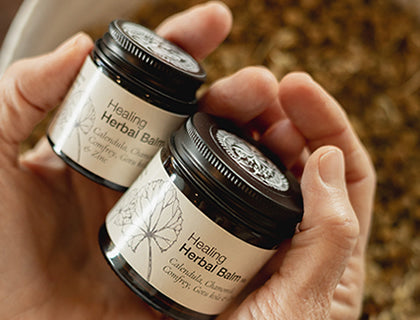
The fresh flowers are best collected on a dry, sunny day. They can be made into a poultice or compress, or infused into oil. They may also be dried and made into creams or balms. In our household we always have a calendula balm close at hand, proudly taking pride of place in our medicine cabinet.
Calendula’s healing properties extend into the mouth and digestive tract as well. It has astringent, anti-inflammatory and antiseptic actions. I use it for healing mouth and throat conditions - it is wonderful for infections, sore gums, sore throats and mouth ulcers. Calendula may also help soothe inflammation of the mucous membranes of the stomach and support healing in gastric and duodenal ulcers.
So remember calendula wherever there is inflammation or infection of the skin, mouth or stomach.
Calendula can also increase the flow of bile and reduce liver congestion, thereby aiding digestion and supporting gallbladder function. When digestion is painful or sluggish, calendula may be useful.
Calendula is also considered a lymphatic remedy, meaning it helps improve lymph flow and supports drainage, detoxification and immune function. When a sore throat is accompanied by swollen glands, calendula is ideal. When glands are swollen anywhere in the body, calendula can help support healing.
Alongside its lymphatic actions, calendula may also improve circulation and reduce congestion in the blood vessels. Culpepper wrote that calendula “strengthens the heart,” and I often think of it as toning the tissues. Peter Holmes, in his brilliant book The Energetics of Western Herbs, says it “tonifies the heart qi.” Many of the old herbal Materia Medicas describe calendula as helping to “strengthen and comfort the heart.”
There is also an ancient herbalist from the 12th century named Macer, who recommended simply looking at the plant to improve eyesight, clear the head and encourage cheerfulness.
This is Calendula.
Golden . Healing . Joyful . Magic
Watch: Herbs in Practice - Calendula with Emma Byrne


Leave a comment
All comments are moderated before being published.